Global fertility patterns are undergoing a profound transformation. Recently published demographic projections reveal trends that go far beyond a simple decline in birth rates. In regions such as Europe and Asia, populations are aging rapidly, birth rates remain well below replacement levels, and in some countries, deaths already outnumber births.
These generational shifts have direct implications for reproductive health, family planning, and the increasingly central role of assisted reproductive technologies (ART) in modern medicine.
Low Birth Rates Are No Longer a Forecast; They Are a Reality.
The data point to a sustained decline in fertility across the European Union. In 2023, the total fertility rate fell to a new historic low of 1.38 children per woman, well below the population replacement level of 2.1.
While fertility rates in the EU experienced modest rebounds in earlier years (particularly between 2008 and 2017) the broader trend has remained downward. After a brief period of stabilization during the pandemic, the decline accelerated again from 2022 onward, reaching a critical point in 2023.
This shift is neither isolated nor temporary. It reflects bigger structural changes in how people delay or limit parenthood, with far-reaching implications for population aging and the long-term demographic balance across Europe.

Why Are Birth Rates Declining?
There is no single explanation. A combination of social, economic, and biological factors drives the decline in fertility rates:
Delayed Parenthood
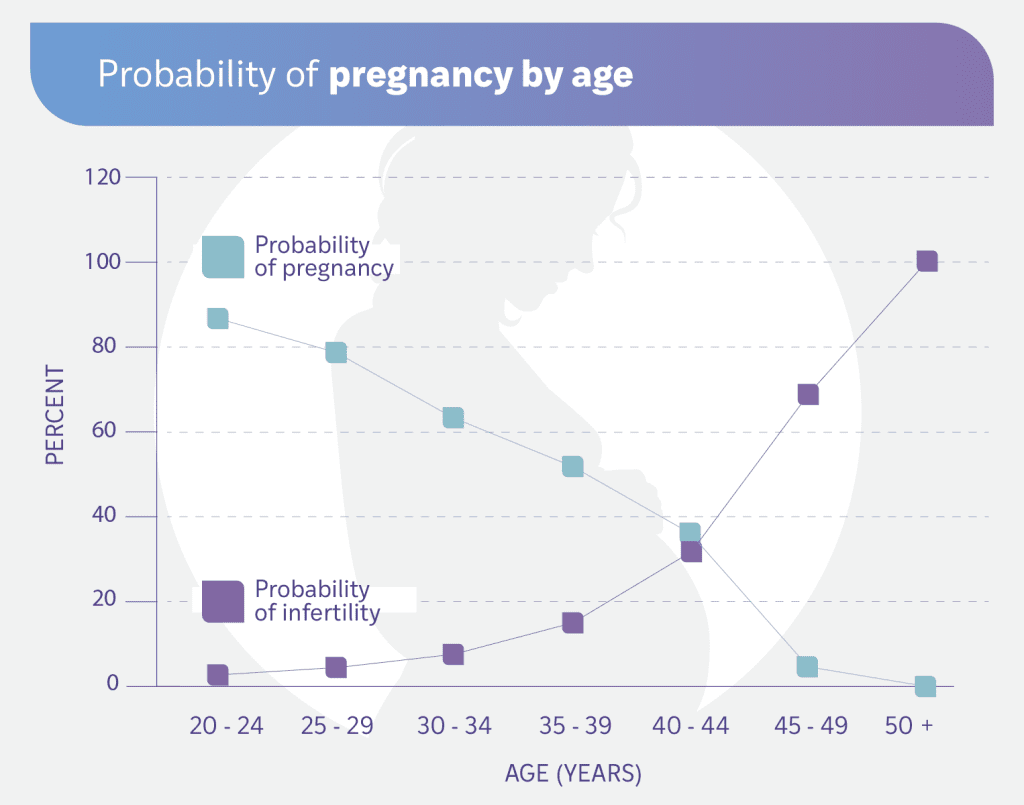
More people are choosing to have children later in life. Higher education, career development, financial stability, and evolving personal priorities have shifted motherhood into the mid-to-late 30s and early 40s for many women, while fatherhood is often postponed even further. While this trend reflects greater autonomy and opportunity, it also comes with clear biological consequences.
Cost of Living and Economic Pressures
Rising housing costs, education expenses, healthcare access, and job instability represent significant barriers for many individuals and couples who would otherwise consider starting a family. These pressures often lead to postponement, or the decision not to have children at all.
Social and Cultural Shifts
Greater access to education, contraception, and professional opportunities has transformed parenthood into a conscious and carefully weighed decision. While these changes represent important advances in autonomy and quality of life, they also contribute to demographic shifts when combined with delayed conception on a global scale.
Maternal Age and Fertility: What Science Tells Us
Female reproductive biology is closely linked to age. As maternal age increases:
- Ovarian reserve declines, reducing the likelihood of spontaneous conception.
- The incidence of chromosomal abnormalities in embryos rises. Conditions such as Down syndrome become more frequent with age, affecting implantation rates, pregnancy outcomes, and obstetric risks.
For many years, male fertility was believed to remain largely unaffected by age. We now know this is a misconception.
Male age does matter. In many cases, it plays a significant role in a couple’s ability to achieve pregnancy. From approximately age 35 onward, sperm quality may decline, with changes observed in concentration, motility, and, most importantly, genetic integrity. These factors can directly influence fertilization, embryo quality, and pregnancy progression.
Fertility is not solely a woman’s issue. It is the result of two biological systems that evolve over time and deserve equal evaluation and attention.
Assisted Reproduction: A Key Medical Response
Within this global context of declining birth rates and delayed parenthood, assisted reproductive technologies have taken on an increasingly important role. Treatments such as in vitro fertilization (IVF), egg vitrification, and preimplantation genetic testing allow clinicians to intervene with a level of precision that natural biology alone may no longer provide.
In Spain, for example, data show that egg vitrification has increased by approximately 13% as a fertility preservation strategy. Additionally, around 10% of babies born in 2023 were conceived through assisted reproduction, highlighting how deeply these technologies are now integrated into modern reproductive care (Source: La Razón).
Assisted reproduction is not only a solution for couples facing biological infertility. It is also a strategic option for individuals who choose to delay parenthood while preserving broader reproductive possibilities for the future.
Beyond Pregnancy: Toward a Healthy Pregnancy
Assisted reproduction is not just about achieving pregnancy; it is also about improving the chances of a healthy one. Modern reproductive medicine incorporates tools designed to reduce risk and optimize outcomes, including:
- Advanced sperm selection techniques (such as MACS) to identify sperm with better genetic integrity when male factor infertility is suspected.
- Preimplantation genetic testing (PGT) to detect chromosomal abnormalities before embryo transfer.
- Endometrial receptivity assessments to determine the optimal timing for implantation.
As fertility patterns evolve worldwide, declining birth rates, population aging, and delayed parenthood demand a comprehensive medical and social response.
Egg Donation: When Motherhood Finds New Paths
Talking about egg donation still carries emotional weight. For many, even considering it involves a period of grief, letting go of the idea of achieving pregnancy exclusively with one’s own eggs. This process is real, valid, and deserves compassionate support.
Yet in today’s reality, where motherhood is increasingly postponed and egg quality is affected by age, egg donation has become a key medical tool within IVF.
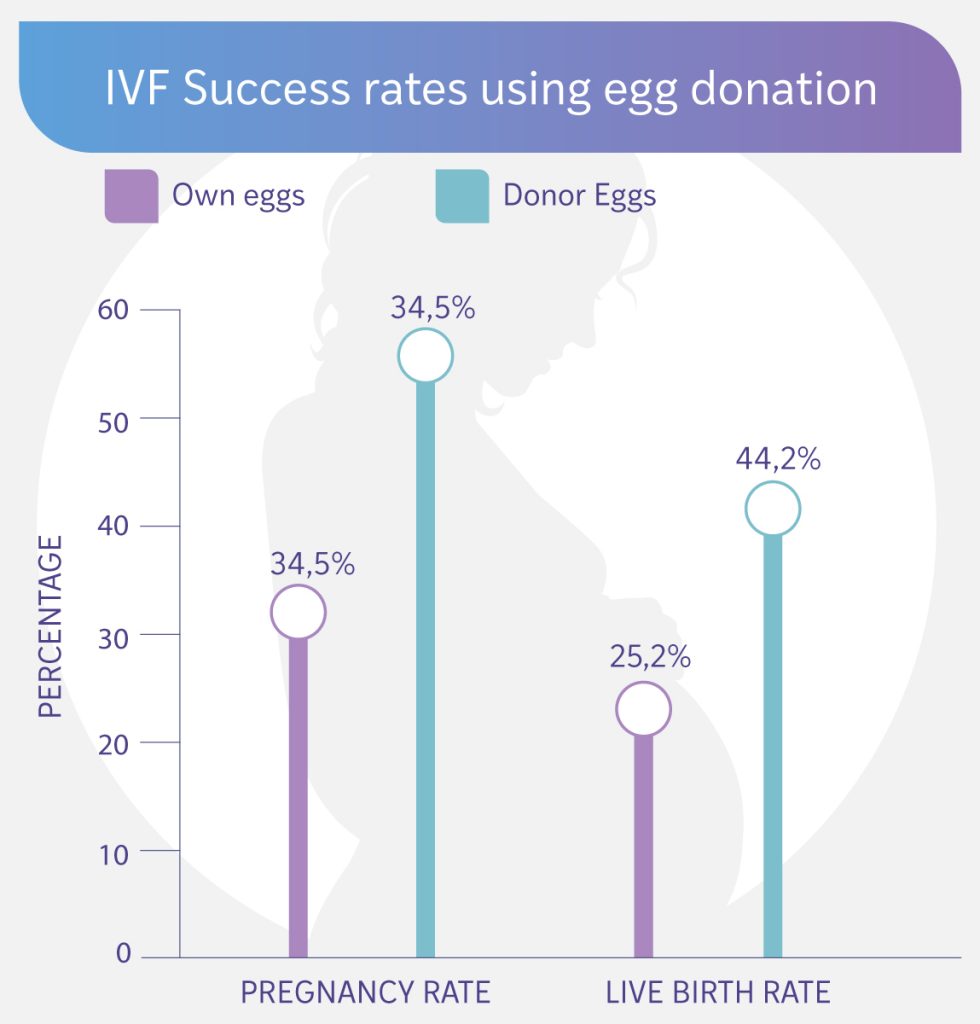
The data are clear. IVF treatments using donated eggs show significantly higher success rates compared to those using a patient’s own eggs at advanced maternal ages. This is not about “giving up” on motherhood, but about expanding the possibilities of achieving it.
The goal is not to replace the desire for motherhood, but to sustain it with strategy.
Egg donation represents a deeply human collaboration: one woman donates, another carries the pregnancy, and an individual or couple chooses to build a family. The bond, the pregnancy, the birth, and the experience of parenthood remain entirely their own.
In clinical practice, we repeatedly see that when motherhood is deeply desired and there is determination to build a family, opening the door to this option can transform treatment outcomes and reduce the emotional and physical toll of repeated attempts with low chances of success.
Reproductive medicine is not only about achieving pregnancies. It is about attaining viable, safe pregnancies and healthy babies. In that journey, egg donation is not a last resort — it is a valid, effective, and increasingly chosen option.
[Gráfica de tasas de éxito con ovodonación]
A New Fertility Reality
Assisted reproduction has become a fundamental component of today’s reproductive landscape — not only to address infertility, but also as a strategic response to global demographic change.
Understanding these trends helps ease the emotional burden carried by those facing reproductive challenges. More importantly, it empowers individuals and couples to make informed decisions, supported by comprehensive medical care that recognizes both the science and the deeply human experience behind every fertility story.