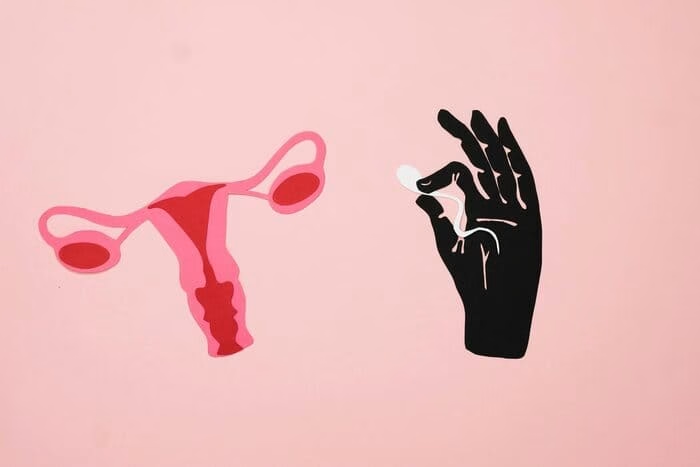
In Vitro Fertilization (IVF) has helped millions of families worldwide fulfill their dream of having children. Since the birth of the first IVF baby in 1978, scientific advancements have transformed IVF into a safe and reliable option for individuals facing fertility...
Biologically, embryo implantation is the process by which a fertilized embryo finds a stable, nurturing place within the endometrium—the inner lining of the uterus. Each menstrual cycle, this tissue thickens and becomes more receptive, preparing to host an embryo if...
For many people beginning their fertility treatment journey, artificial insemination—also known as intrauterine insemination (IUI)—is often one of the first options recommended. It’s a less invasive process compared to in vitro fertilization (IVF) and can be a good...
What is Ovulation and How Does it Affect Fertility? Ovulation is the process through which one of your ovaries releases a mature egg, which can lead to pregnancy if fertilized by sperm. This process happens once per menstrual cycle, around 14 days before your next...
Female fertility is full of surprising facts that many of us don’t realize until later in life, often when we start thinking about starting a family. One key fact is that women are born with all the eggs they will ever have. Unlike men, who continuously produce sperm,...