

A lot of men spend months trying to conceive with their partner and still assume that if there’s no pain, no erectile issues, and no obvious physical changes, their fertility must be fine. That’s usually the first mistake. Male infertility often has no symptoms, which is exactly why getting evaluated early can save months of uncertainty and lead to better medical decisions.
When pregnancy isn’t happening, male fertility should not be treated as a secondary issue. A male fertility evaluation is part of the full couple’s workup and usually includes a medical history, a physical exam, and at least one semen analysis, because a single data point rarely explains the whole picture.
How do I know if I need a male fertility evaluation?
Most men with fertility problems do not feel anything unusual. They may have normal sex drive, normal erections, normal ejaculation, and a sex life that seems completely typical, and still have a male factor that is worth investigating.
The most important sign is not always something you feel in your body. Very often, it is the amount of time you have been trying to conceive without success. That is one reason fertility specialists treat the trying-to-conceive timeline as a central part of the male evaluation.
There are also medical histories that make a male fertility evaluation even more important. Testicular surgery, undescended testicles, varicocele, prior infections, testosterone use, anabolic steroid use, some medications, chemotherapy, radiation, and hormonal disorders can all affect sperm production or sperm transport.
When it comes to fertility, it is not a good idea to wait for symptoms to show up, or even to wait until you have been trying for a certain amount of time without success. Our advice at Nascere is to treat a fertility consultation as preventive care, in the same way you would approach other areas of your health. If pregnancy is not happening, both partners deserve to be evaluated with the same level of attention. That kind of review can uncover anything from treatable issues to findings that call for more specific testing.
When should I schedule a fertility consultation if I’m a man?
A lot of couples put off the appointment because they think they should “keep trying a little longer” first. Sometimes that only drags out the uncertainty. Clinical guidelines and educational resources agree that infertility evaluation is shaped by two main things: how long pregnancy has not happened, and whether there are medical risk factors that raise concern for a male factor.
If you already know you want to be a dad, a fertility checkup should be routine, not a last resort. Schedule the appointment now. Do not wait until you feel like you need it. It also makes sense to schedule sooner if you already know there is something in your history that could affect your fertility. A history of varicocele, surgery involving the genital area, current or past testosterone use, cancer treatment, or a previous abnormal semen analysis is reason enough not to put it off.
In other words, booking a consultation does not mean assuming the worst. It means stopping the guesswork. In fertility care, having useful information early changes the quality of every decision that comes next.

What happens during a first fertility appointment?
The first appointment does not start with treatment. It starts with questions. The doctor needs to understand how long you have been trying to conceive, what testing has already been done, whether there are important medical issues in your history, and which factors could be affecting sperm production or delivery.
That visit usually includes a detailed medical history. It may cover childhood illnesses, surgeries, medications, testosterone or anabolic steroid use, lifestyle habits, sexual history, prior infections, and any other details that help connect pieces that may seem minor on their own.
A physical exam may come next. This part helps identify findings such as varicocele, changes involving the testicles, epididymis, or vas deferens, and signs that point toward a production problem, a transport problem, or a hormonal issue.
In many cases, that first appointment also opens the discussion about which tests are actually necessary. Not every man needs the exact same workup. Sometimes it is enough to start with a properly collected semen analysis. In other cases, the context calls for hormone testing, sperm DNA fragmentation testing, or other studies to build a more complete picture.
What tests are usually ordered in a male fertility evaluation?
The basic test is a semen analysis. It is the most important first step in evaluating male fertility because it looks at sperm concentration, motility, morphology, and other semen characteristics that help assess reproductive function.
Depending on the result and the medical history, the specialist may order additional tests to better understand where the problem is. In some cases, the question is whether sperm production is impaired. In others, the issue may involve transport, hormone regulation, or changes that a semen analysis alone cannot fully reveal.
- Bloodwork to check hormone levels. This is done with bloodwork. It often includes hormones such as FSH, LH, testosterone, and sometimes prolactin. The goal is to look for clues about how the hormonal system that regulates sperm production is functioning. It can also help distinguish between low hormonal signaling from the brain and a problem originating in the testicles themselves.
- Sperm DNA fragmentation testing. This study evaluates the integrity of the sperm’s genetic material. It can detect DNA damage that does not appear on a standard semen analysis. It may provide useful information when the semen analysis looks normal but pregnancy is still not happening, or when the goal is to understand sperm quality beyond count, movement, and shape.
- Scrotal ultrasound. This is an imaging test of the scrotum and testicles. It can help identify varicocele, changes in testicular size, or findings in the epididymis and ducts that suggest a transport issue or obstruction. In men with azoospermia, for example, it may help clarify whether the issue is impaired production or a blockage.
- Genetic testing. This is usually considered when there are findings such as azoospermia or a very low sperm count. The purpose is to detect chromosomal or genetic abnormalities that may be related to the absence of sperm or a severe reduction in sperm production. Depending on the case, it may be done with a blood sample and can help clarify the origin of the problem and guide next decisions.
- Tests that help pinpoint the issue: production or transport. Sometimes the key question is not only whether sperm are low or absent, but why. To answer that, the doctor combines information from the physical exam, hormone testing, imaging, and semen analysis. The goal is to determine whether the testicles are not producing sperm properly, or whether sperm are being made but blocked from reaching the semen.
Other targeted testing based on the case. If the medical history points in a specific direction, the specialist may expand the evaluation with more focused testing. This can happen when there is a history of undescended testicles, testicular surgery, cancer treatment, testosterone use, or concern for a more complex hormonal disorder. The important point is that these tests are not ordered by routine. They are ordered to answer specific questions about your case.
Worth noting: A “normal” result does not always close the case completely, and an abnormal result does not mean everything is already defined. What actually guides care is the combined interpretation of your history, physical exam, and well chosen testing.
How is a semen analysis done, and how should I prepare?
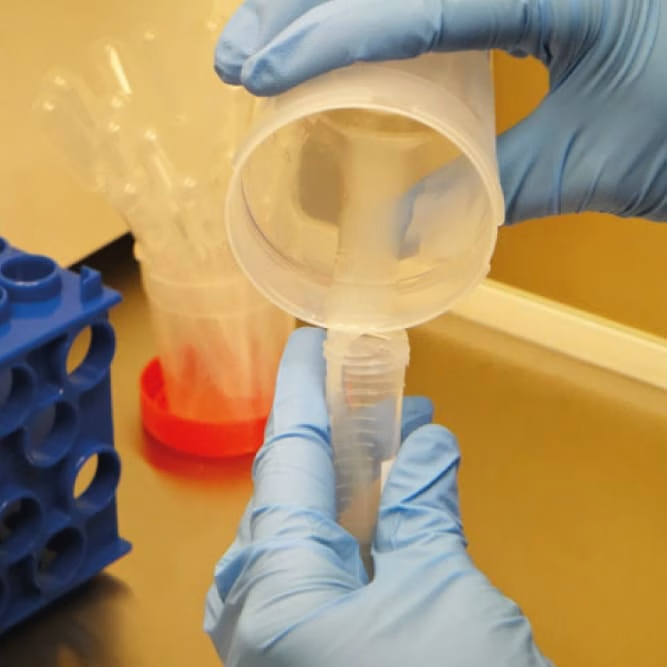
A semen analysis is a lab test that looks at semen and sperm. It is commonly part of the initial evaluation for male factor infertility.
Preparation matters if you want the result to be useful. Multiple sources recommend a period of sexual abstinence beforehand, usually 2 to 5 days, because that helps make the sample more representative and reduces distortions caused by abstaining for too short or too long a period.
It is also important to follow the clinic’s instructions carefully for collecting and delivering the sample. Some clinics allow on-site collection, while others explain how to collect and transport the sample if it is produced outside the lab. Hygiene, the correct container, and delivery timing can all affect the quality of the study.
A lot of men come in with one very specific question: “Will they tell me right then whether I can be a dad or not?” The reality is more complicated than that. A semen analysis is helpful, but it does not replace full medical interpretation. In many cases, at least two samples or the right clinical context are needed to determine whether a finding is persistent and what it means in your situation.
What are specialists looking for in a semen analysis?
A semen analysis looks at several things at once. The most important include sperm count, how well the sperm move, and what shape they have.
That helps identify whether something may be affecting your chances of achieving a pregnancy. It can also offer clues about how significant the issue may be and whether more in depth testing is needed to understand what is causing it.
There is another important point here. Your diet and lifestyle habits can also affect the quality of the sample. Smoking, heavy alcohol use, certain hormones or medications, major weight changes, and unhealthy habits can affect sperm count, movement, and shape, and that can also affect your chances of pregnancy.
That does not mean the semen analysis gives a final answer by itself. An abnormal result may be tied to hormonal issues, anatomical problems, genetics, infections, or environmental exposures. A result that falls within range does not rule everything out either if the medical history suggests there is reason to look deeper.
That is why a semen analysis should never be interpreted in isolation. Read in the right clinical context, it can give very clear direction about what comes next and which additional tests may be worth ordering. Read out of context, it can create more questions than answers.
What can I expect from a fertility consultation at Nascere?
At Nascere, a fertility consultation is not set up as a place to hand out improvised answers. It is where a clear diagnostic plan begins, and where you decide which tests are actually worth doing for your case and which are not.
That changes the patient experience. Instead of jumping straight to a broad recommendation, the team reviews the full history, identifies which factors deserve a closer look, and organizes the information so decisions are grounded in real evidence.
It is also important to have the right expectations. A first appointment does not always finalize the diagnosis that same day. What it should give you is direction. You should leave understanding what the main concerns are, which tests come next, what each one is for, and what answers your doctor is trying to get from them.
When a deeper workup is needed, Nascere uses complementary tools such as sperm DNA fragmentation testing and other studies that go beyond a superficial reading of male factor infertility. The logic is simple. If pregnancy is not happening, you need to understand why before making decisions in the dark.
Frequently asked questions about male infertility
Can I have sex normally and still have male infertility?
Yes. Male fertility can be affected even if sex drive, erections, and ejaculation all seem normal.
Does an abnormal semen analysis mean I won’t be able to have children?
Not necessarily. A semen analysis provides direction, but the meaning of the result depends on the full clinical context and sometimes on additional testing.
If my semen analysis is normal, does that mean I do not need any more tests?
Not always. In some cases, a doctor may recommend more testing if your medical history or the length of time without pregnancy justifies a deeper look.
Is it worth getting checked even if I am just starting to suspect something might be wrong?
Yes, especially if you already have a history that could affect fertility or if pregnancy has not happened and the uncertainty is already weighing on you. Clarity early on is usually more helpful than continuing to assume everything is fine.
If you and your partner have been trying to conceive for a while, or if there is already something in your medical history that makes you think your fertility should be evaluated, Nascere can study your case with the seriousness it deserves. Let’s find those answers together.