

Implantation bleeding is one of the earliest signs of pregnancy, yet it often causes confusion, especially for those trying to conceive. How can you tell if it’s implantation spotting or just the start of your period? Understanding the differences can help you recognize early pregnancy signs with confidence.

What Is Implantation Bleeding?
Implantation bleeding occurs when a fertilized egg attaches to the uterine lining, sometimes causing minor blood vessel rupture. This typically happens 6 to 12 days after ovulation, often before your expected period.
According to the American College of Obstetricians and Gynecologists (ACOG), implantation bleeding is light and short-lived, lasting 1 to 3 days. Unlike a menstrual period, it tends to be lighter in flow and appears pink or brown rather than bright red.
When Does Implantation Bleeding Occur?
The timing of implantation bleeding can vary depending on your cycle, but there’s a general pattern: it typically occurs about 7 to 10 days after ovulation.
To put this in perspective, if you ovulated on day 14 of your cycle, you might notice spotting anywhere between days 21 and 24, right around when you’d normally expect your period to arrive. This is precisely why so many women mistake it for an early period, especially if they have irregular cycles.
Women who are actively tracking their ovulation, whether they’re trying to conceive or using fertility awareness methods, are usually the only ones who can identify this bleeding as something abnormal from their regular menstrual flow.
How to Differentiate Implantation Bleeding from a Period
Some women may not experience implantation bleeding at all, while others mistake it for an early period. Here’s how to tell them apart:
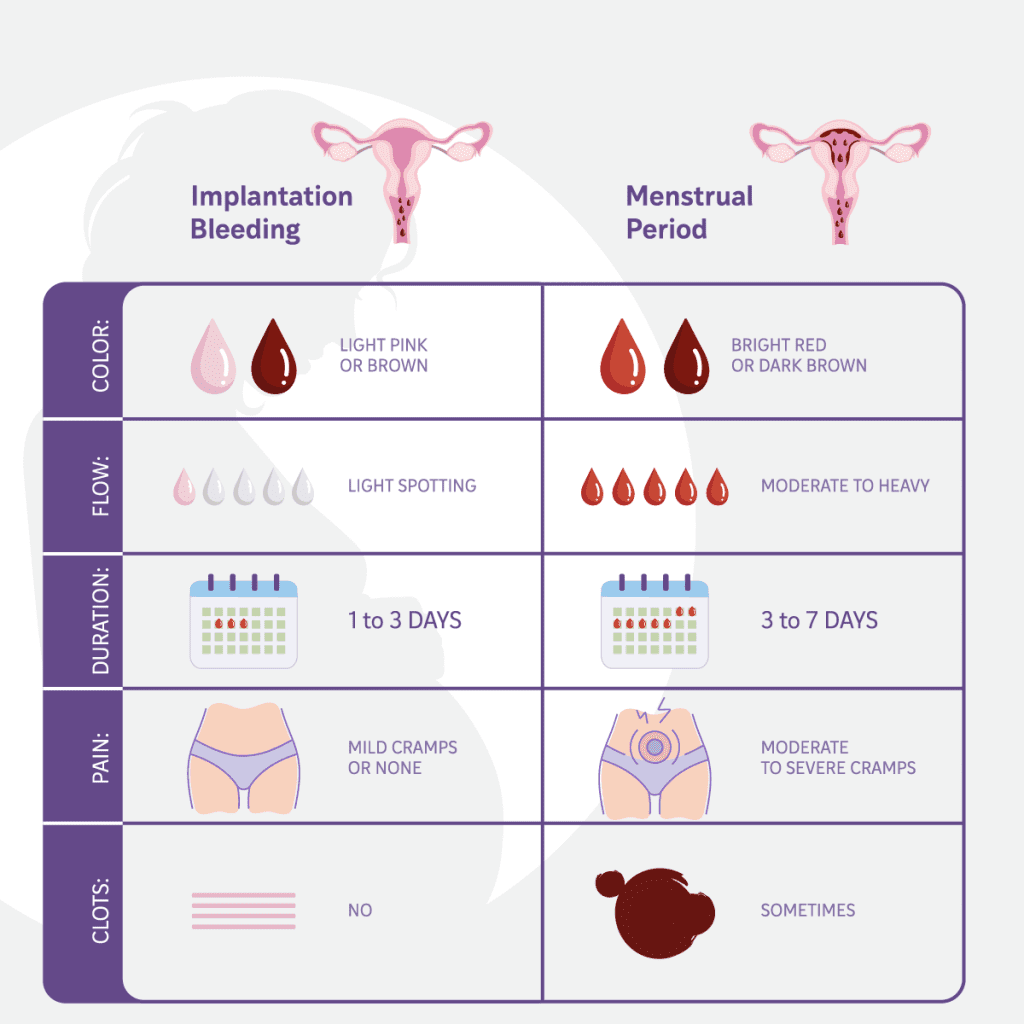
Tip: If the bleeding lasts more than three days, is heavy, or is accompanied by intense pain, it’s likely a menstrual period rather than implantation bleeding.
How Soon Can I Take a Pregnancy Test After Implantation Bleeding?
One of the most common questions is when to take a pregnancy test after noticing what might be implantation bleeding. Fertility specialists recommend waiting at least 10 to 14 days after ovulation, since that’s when the hormone Human Chorionic Gonadotropin (hCG) reaches detectable levels in urine or blood.
Testing too early can give you a false negative, even if you’re already pregnant. So if you notice light spotting that’s different from your regular period, it’s best to wait a few days and retest if you’re unsure.
When to Be Concerned
While implantation bleeding is generally harmless, certain symptoms may signal complications, such as:
- Heavy bleeding similar to a period
- Intense abdominal or pelvic pain
- Dizziness or fainting
- Prolonged or progressively heavier bleeding
In these cases, consulting a fertility specialist is crucial to rule out conditions like ectopic pregnancy or miscarriage.
Frequently Asked Questions About Implantation Bleeding
Does everyone experience implantation bleeding?
No. Implantation bleeding doesn’t happen to everyone. In fact, most women don’t experience any spotting when they get pregnant. However, not experiencing any bleeding doesn’t mean you’re not pregnant.
What about implantation bleeding after IVF embryo transfer?
It can happen, but it’s not super common. Just like with natural conception, some women spot a little after embryo transfer. But whether you spot or not wouldn’t be a definitive confirmation of success on your IVF cycle.
What color is implantation spotting or bleeding supposed to be?
It varies from person to person. Usually it’s pink or brown, but sometimes it can look more reddish. The main thing is that it’s typically not bright red like a regular period.
Does implantation hurt?
Implantation itself doesn’t hurt. Some women feel mild cramping similar to period cramps, but lighter. If you’re experiencing severe pain, reach out to your Doctor immediately.
Implantation bleeding can be an early sign of pregnancy, but distinguishing it from a period requires careful observation of its color, duration, and intensity. If you’re unsure or experiencing unusual symptoms, seeking medical advice is always the best approach.
If you suspect you might be pregnant or have questions about your fertility, Nascere has a team of specialists ready to help clarify your questions and support you through this process. Schedule a consultation today for a full evaluation!