
A hysterectomy changes one essential part of reproduction: it removes the uterus, the organ where an embryo normally implants and a pregnancy develops. Without a uterus, a person cannot carry a pregnancy in their own body with current routine fertility treatment.
What a hysterectomy does not necessarily remove is every possibility of creating embryos or having a genetically related child. If the ovaries were preserved and continue to function, eggs may still be available for in vitro fertilization, or IVF.
That distinction is central to understanding fertility after a hysterectomy. Reproductive medicine can help with ovulation, fertilization, problems involving sperm, and embryo creation. It cannot routinely replace the uterus itself.
The options that remain therefore depend on what was removed during surgery, what was preserved, and whether the ovaries are still functioning.
What Is a Hysterectomy, and How Does It Affect Fertility?
A hysterectomy is surgery to remove the uterus. Depending on the reason for surgery and the procedure performed, the cervix may also be removed.
The ovaries are separate organs and are not automatically removed with the uterus. If they are preserved and continue to function, they may still produce hormones and eggs. In some cases, this means eggs can still be retrieved and fertilized through IVF after a hysterectomy.
What is no longer present is the organ where an embryo would normally implant and develop throughout pregnancy. Without a uterus, carrying a pregnancy is not possible with current routine fertility treatment.
If both ovaries were also removed, retrieving your own eggs after surgery would no longer be possible. Embryos could potentially be created with donor eggs, depending on the circumstances, but another uterus would still be required for the pregnancy.
These distinctions matter because a hysterectomy does not lead to one universal answer about a person’s reproductive possibilities.
Why Might a Hysterectomy Be Necessary?
A hysterectomy may be recommended for many different reasons. In some cases, it is considered after medications, hormonal treatments, or less invasive procedures have not been enough to control the underlying gynecologic condition. In others, such as certain cancer diagnoses or an obstetric emergency, removing the uterus may be necessary to protect a patient’s health or life.
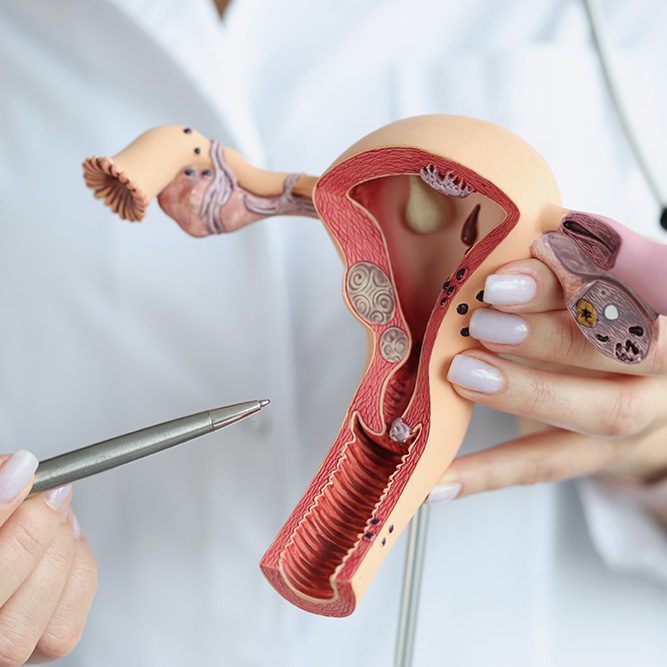
A hysterectomy is not the only reason a woman may not have a uterus. Some women are born without one, or with a uterus that did not fully develop, because of congenital conditions such as Mayer-Rokitansky-Küster-Hauser syndrome (MRKH). Other abnormalities of Müllerian development, including more complex forms such as MURCS association, can also affect the development of the uterus and other structures.
Some of the most common situations in which a hysterectomy may be considered include:
- Obstetric emergencies, such as severe hemorrhage, in which a hysterectomy may be necessary to protect the patient’s life.
- Uterine fibroids that cause heavy bleeding, pain, pelvic pressure, or other significant symptoms and have not responded adequately to less invasive treatments.
- Adenomyosis when symptoms are severe and other treatment options have not provided sufficient relief.
- Uterine prolapse when the uterus moves down from its normal position and significantly affects quality of life.
- Endometriosis in certain complex and carefully selected cases, particularly when other uterine conditions are also present.
- Gynecologic cancer or precancerous conditions when removing the uterus is part of the recommended cancer treatment.
Can Science Replace the Uterus?
At present, there is no artificial uterus available for clinical use that can support an entire human pregnancy through birth.
Uterus transplantation does exist, and babies have been born after these procedures. It is an extraordinary medical development, but it is very different from conventional fertility treatment and is not a routine alternative to IVF.
A uterus transplant involves major transplant surgery, a suitable donor, medication to prevent organ rejection, highly specialized medical care, and assisted reproduction afterward. It is therefore important to distinguish what is scientifically possible from what is routinely available to patients today.
What Can Fertility Treatment Do, and Where Are Its Limits?
Several things must come together for pregnancy to occur: an egg, sperm capable of fertilization, an embryo with the potential to continue developing, and a uterus in which that embryo can implant.
Different fertility treatments address different parts of this process.
Timed intercourse can help when the goal is to identify ovulation and the fertile window more precisely. Intrauterine insemination, or IUI, may be appropriate in certain cases and involves preparing a semen sample before placing sperm directly inside the uterus around the time of ovulation.
IVF allows eggs to be retrieved from the ovaries and fertilized with sperm in the laboratory. It may be useful, for example, when blocked fallopian tubes prevent egg and sperm from meeting.
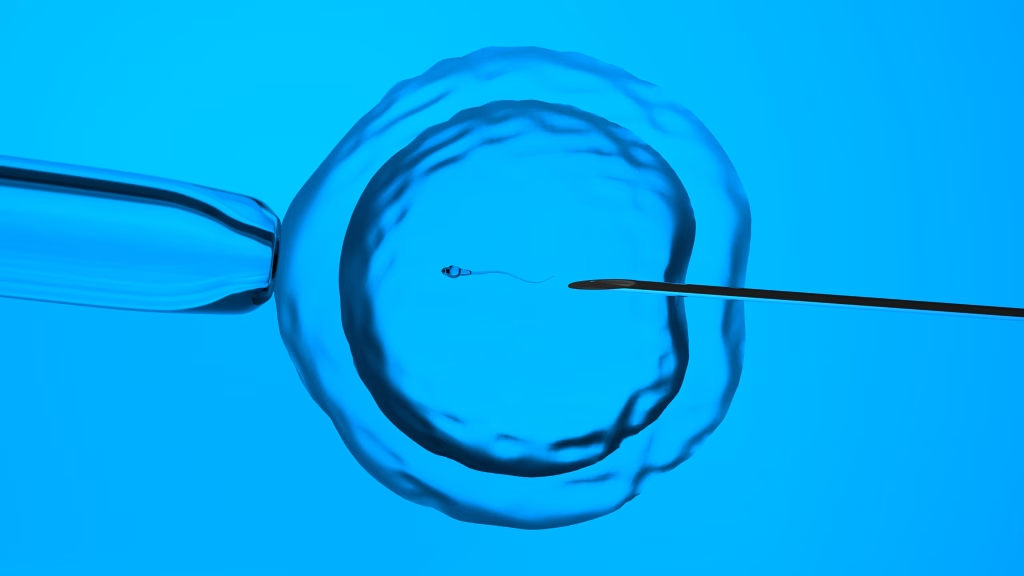
When male factor infertility is involved, IVF may be combined with intracytoplasmic sperm injection, or ICSI. A semen analysis can identify changes in sperm concentration, motility, morphology, and other parameters. Depending on the situation, ICSI allows a single sperm to be injected directly into an egg to facilitate fertilization.
These treatments can address ovulation, fertilization, tubal factors, problems involving sperm, and embryo creation. None of them can replace the uterus.
That is the central distinction after a hysterectomy. If functioning ovaries remain, IVF may still make it possible to retrieve eggs and create embryos. It cannot, however, allow a person without a uterus to carry those embryos in their own body.
What Happens If Embryos Can Be Created but You Cannot Carry the Pregnancy?
Gestational surrogacy is one reproductive possibility in some countries. It involves another person carrying a pregnancy created through assisted reproduction.
In Mexico, the legal situation is complex. There is no single federal law that regulates surrogacy uniformly across the country. Some states have specific provisions, while others do not have legislation that directly addresses the process.
In Mexico City, the Supreme Court of Justice of the Nation established a legal criterion in February 2026 for addressing certain cases in the absence of specific regulation. Courts may review agreements that were formally ratified beforehand, with particular attention to informed consent and the rights of everyone involved.
For that reason, saying that surrogacy is simply illegal in Mexico would be inaccurate. But the absence of a blanket prohibition does not mean that the process is comprehensively regulated either.
Anyone considering this route needs both appropriate medical evaluation and independent legal guidance based on the jurisdiction and circumstances involved.
How Does Gestational Surrogacy Work?
When embryos can be created but the intended parent cannot carry a pregnancy, gestational surrogacy may be considered. Medically, the process relies on IVF.
Eggs are retrieved from the intended parent or an egg donor and fertilized in the laboratory to create embryos. The person who will carry the pregnancy undergoes medical evaluation and preparation before an embryo is transferred into their uterus. If implantation occurs, the pregnancy is then monitored in the usual way, with care adapted to the individual pregnancy.
In some cases, the gestational carrier may be someone close to the intended parent, such as a sister, cousin, or another trusted person. Regardless of the relationship, the process should begin with appropriate medical evaluation, informed consent, clear expectations, and legal guidance designed to protect the health, autonomy, and rights of everyone involved.
Reproductive medicine has developed faster than legislation in some of these areas, which is one reason surrogacy remains part of a broader legal and ethical conversation about reproductive rights.
Article 4 of the Mexican Constitution recognizes the right of every person to decide freely, responsibly, and in an informed manner on the number and spacing of their children. That constitutional principle is important, but it does not replace the need for careful legal analysis in an area where regulation remains uneven.
So, What Is Possible After a Hysterectomy?
If your ovaries remain and continue to function, it may still be possible to retrieve eggs and create embryos through IVF. If your own eggs are not available, egg donation may offer another way to create embryos.
What does not change is the role of the uterus. Without one, there is currently no routine fertility treatment that allows you to carry a pregnancy in your own body.
That distinction is important because a hysterectomy does not necessarily eliminate every possibility of having a genetically related child or becoming a parent through assisted reproduction. It changes which parts of the reproductive process remain possible in your body and which would require another route.
The answer therefore depends on which organs were preserved, how well the ovaries continue to function, whether eggs or embryos are available, and what medical and legal options are appropriate in the individual situation.
At Nascere, we can evaluate reproductive function after a hysterectomy and explain which medical options may be available based on each person’s circumstances.
Frequently Asked Questions
Can I Have a Biological Child After a Hysterectomy?
It may still be possible to have a genetically related child if your ovaries were preserved and continue to function. In that situation, IVF may allow eggs to be retrieved and embryos to be created. Because there is no uterus after a hysterectomy, the pregnancy would still require a uterus in which to develop.
If the ovaries were removed or no usable eggs are available, having a child genetically related to you through your own eggs would no longer be possible after surgery.
Is Egg Donation an Option After a Hysterectomy?
Yes, in some circumstances. Egg donation can provide eggs when a person’s own eggs are not available or cannot be used.
It is important to understand what egg donation does and does not solve. It addresses the absence of usable eggs. It does not replace the uterus. If both factors are present, donor eggs may be used to create embryos, but another person would still need to carry the pregnancy.
Can I Freeze Eggs or Embryos Before a Hysterectomy?
In many cases, yes, provided there is enough time before surgery and the underlying medical condition makes fertility preservation appropriate.
Egg freezing may preserve the possibility of using your own eggs later. Embryo freezing may be another option when fertilization before surgery is appropriate. Neither option allows a person to carry a pregnancy after the uterus has been removed, but both may preserve reproductive possibilities that would otherwise be lost if ovarian function is affected or the ovaries also need to be removed.
If future fertility matters to you and a hysterectomy is being planned, discussing fertility preservation before surgery can be an important part of the medical conversation.