What Is Reciprocal IVF, and How Does It Work?
For female couples who want to share the experience of bringing a baby into the world, reciprocal IVF offers a special possibility: one partner provides the eggs, while the other carries the pregnancy.
In Mexico and other Spanish-speaking countries, this treatment is commonly called the ROPA method. In English, it’s known as reciprocal IVF or shared motherhood.
The process involves in vitro fertilization (IVF). Eggs from one partner are fertilized with donor sperm in a laboratory. An embryo is then placed in the other partner’s uterus, where it may develop into a pregnancy.
Choosing reciprocal IVF doesn’t necessarily mean either partner has fertility problems. Many couples choose it simply because they want to share the experience of having a baby. However, unexpected fertility challenges can still arise, as Aris and Liz discovered.
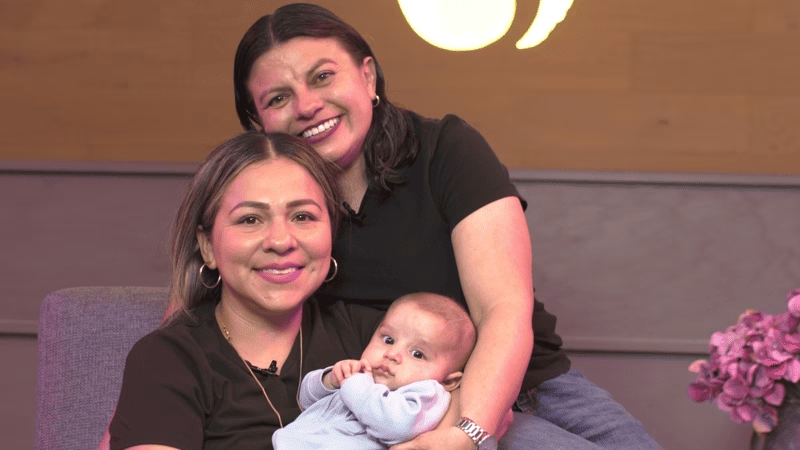
Aris and Liz: A Story That Began Long Before Leo
Aris and Liz met ten years ago while working together. Over time, they fell in love, got married, and started imagining what life would be like with a baby.
In their testimonial, they share how they decided it was time to become moms.
“We met because we worked together ten years ago, and we decided to get married two years ago. Two years ago, we also started trying to become moms. Even though we already felt complete, we needed the cherry on top.”
They both wanted to take part in bringing their baby into the world, so they chose reciprocal IVF.
Liz would provide the eggs, and Aris would carry the pregnancy. It was a meaningful way to share motherhood, although neither of them could have imagined everything they would go through before meeting their baby.
When the First Attempt Doesn’t Go as Planned
Their first experience with fertility treatment took place at another clinic, recommended by some friends. They were excited to get started, but their first attempt was unsuccessful.
Beyond the disappointment of not getting pregnant, they were left with unanswered questions. They felt they hadn’t received enough information to understand what had happened.
“At the first clinic where we did IVF, they barely told us why it wasn’t working. I think there was a lack of knowledge. […] When my first attempt failed, honestly, we thought about not trying again.”
Trying to have a baby can come with unexpected challenges, regardless of how a family is formed. For same-sex female couples, there’s an important distinction worth understanding: needing a sperm donor doesn’t mean either partner is infertile.
However, pregnancy isn’t guaranteed simply because a couple is using fertility treatment. Difficulties can arise even when there were no known fertility problems beforehand.
Aris and Liz needed to understand their options and, more importantly, decide whether they felt ready to try again.

A New Opportunity at Nascere
After taking some time to process their experience, Aris and Liz decided to look for another fertility clinic. That’s how they found Nascere.
Their first appointment took place during the pandemic, so they initially met our team over a video call. Soon afterward, they visited the clinic in person to discuss their options.
“Our first appointment happened during the pandemic, so it was over Zoom call with a couple of doctors from Nascere. They made us feel confident right from that moment. […] They asked us to bring any test results we already had, and we really liked that because it meant we wouldn’t have to spend money repeating those tests.”
Finding a place where they felt comfortable asking questions, receiving explanations, and getting to know their medical team made a difference to them.
They moved forward with reciprocal IVF, but getting pregnant would still take several attempts. There were medications, injections, clinic visits, and results that didn’t always turn out as they had hoped.
Along the way, they also faced difficult conversations as a couple.
“When it doesn’t work the first time, things get complicated for a couple, because each person experiences grief and pain in their own way. So deciding to try again isn’t easy. […] After talking with our doctors, we decided to give it another try, but we’d already agreed that it would be our last chance.”
They had decided to try one final time. Not because they had stopped wanting to become moms, but because they understood how emotionally difficult the experience had become.
The Day a New Chapter Began
April 4, 2024, is a date Aris and Liz will always remember.
That day, they came to Nascere for their embryo transfer. They still didn’t know whether this attempt would lead to a pregnancy, but they remember a particularly special moment before the procedure.
“We went into the operating room, and the Nascere doctors said, ‘Let’s make a wish.’ And that was the wish: that the embryo would implant successfully. We all wished for the same thing.”
Then came the waiting.
For the next few days, they decided to keep everything between themselves. They wanted to experience those moments together without getting ahead of the results.
“We went through those days just the two of us because we didn’t want to tell anyone, so only she and I knew. We tried to watch movies, watch a series, order something good to eat, stay calm, and not overthink it: ‘What if it doesn’t work? What if it does?'”
When they finally received the news that the pregnancy test was positive, they could hardly believe it. After everything they had experienced, they wanted to wait a little longer before celebrating.
Two days later, another test brought encouraging results, and they finally began to enjoy the news.
The pregnancy wasn’t without its challenges, either. Before their first ultrasound, Aris experienced bleeding that left them both worried. Seeing Leo’s heartbeat became one of the most emotional moments of their pregnancy.
They also faced other difficulties along the way. In total, they counted 268 injections as part of the care Aris needed.
Despite everything, they were getting closer to meeting their baby.
The Day They Finally Met Leo
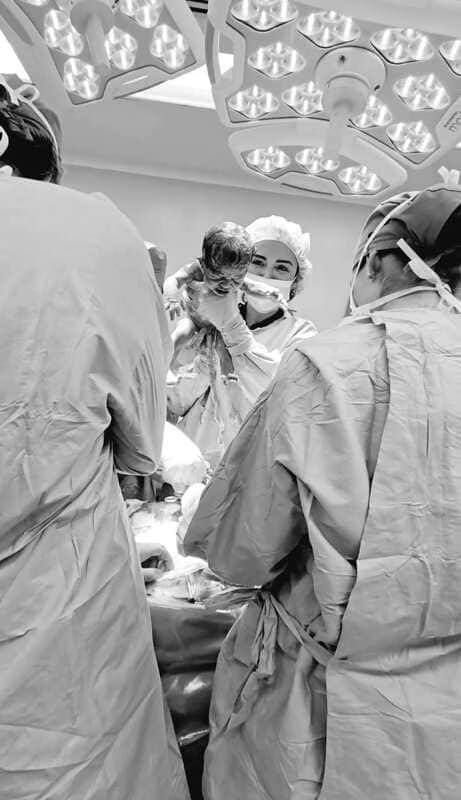
After months of anticipation, the moment finally arrived to hold Leo in their arms.
“The day Leo was born was the best day of our lives. Hearing him cry, being in the operating room, seeing the whole Nascere team […] that gives you peace of mind. It was pure happiness.”
For Aris and Liz, Leo’s arrival meant much more than completing a fertility treatment. He was the baby they had been waiting for, and together, they were beginning an entirely new chapter of their lives.
There Are Many Ways to Build a Family
Aris and Liz’s experience reminds us of something important: there’s no single way to build a family.
Some couples choose reciprocal IVF because they want to share the experience of pregnancy. Others explore different fertility treatments. Some need medical support because of fertility challenges, while others simply need another way to have a baby.
Every one of these families deserves to feel seen, heard, and supported.
In Mexico, conversations about LGBTQ+ family building and fertility still deserve more attention. The World Health Organization recognizes that same-sex couples, along with many other people and families, may need access to fertility care.
At Nascere, we’re truly grateful to have been part of Aris and Liz’s story. Knowing they placed their trust in our team and allowed us to support them through such an important experience means a great deal to us.
Today, when they talk about their family, Aris and Liz have a beautiful way of describing everything they’ve been through:
“Nascere definitely changed our lives because before, we were a family of two, and now we’re a family of three. It’s the most beautiful miracle.”
If you and your partner are thinking about having a baby, you can learn more about reciprocal IVF and shared motherhood or reach out to our team to explore your options together.